
5 min read
The King didn't fail. Burger King miscast him.
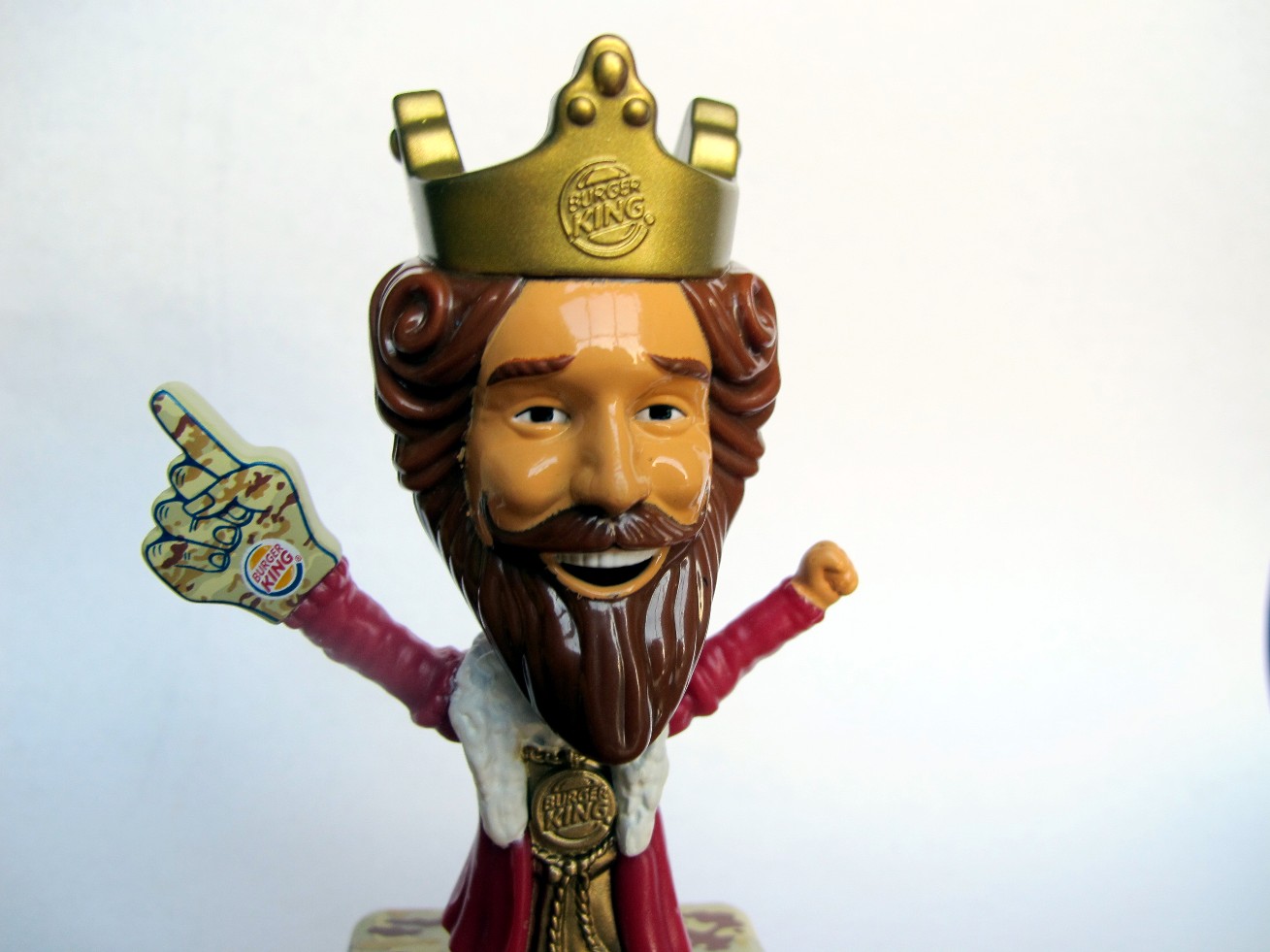
The King, frozen mid-grin forever. Photo by frankieleon, CC BY 2.0

Burger King made it official this month: the King is fired. Not retired, not resting. Fired, by name, by the CMO. “We fired what we’ve labeled the Creepy King,” Joel Yashinsky told Yahoo Finance. “He turned off particularly moms and families, and so we lost a generation.” The replacement, built with agency BarkleyOKRP, is a platform called “Guest Is King.” The new mascot is you.
The obituary writes itself. Creepy mask, scared the moms, good riddance. If you commission characters for a living, that reading should bother you, because it gets the cause of death wrong. The King was one of the best-designed brand characters of his era. He failed anyway, and the reason he failed is the most useful lesson in mascot strategy of the last twenty years.
He should have worked
Start with the origin, because it explains everything downstream. When Crispin Porter + Bogusky took over the Burger King account, someone at the agency found an oversized fiberglass King head from the 1970s for sale on eBay. They restored it, put it on an actor, and in October 2004 aired “Wake Up with the King”: a man opens his eyes at dawn and the King is lying in bed next to him, motionless, holding a breakfast sandwich.
As character design, this is close to perfect. The silhouette reads in one frame. The frozen grin never changes, which makes him unsettling on purpose. He never speaks, which means he never dates himself. He was meme-native years before feeds existed to meme him in. Put him next to the era’s other fast food characters and he is the only one you can describe from memory.
So yes, he should have worked. In one specific mode, he did.
The cameo was the right move
The King’s best moments were never commercials. In 2006 Burger King sold three Xbox games at the register for four dollars with a value meal, including Sneak King, a game where you play as the King sneaking up on hungry people. The games moved millions of copies. In 2015 the brand reportedly paid about a million dollars to put the King in Floyd Mayweather’s ring walk before the Pacquiao fight, where he stood in the entourage, said nothing, and got more press than the undercard.
That is the mode. He shows up somewhere he has no business being, does not explain himself, and leaves. Drop him into a music video and he makes sense in a way he never made sense handing a Whopper to a dad. The frozen grin that reads as menace at a drive-thru reads as deadpan comedy in a boxing ring. Same mask, different casting.
There is a name for a performer like this. He is a guest star. Guest stars are valuable. Entire careers run on four minutes of screen time per project. What a guest star cannot do is carry the show.
The miscast
Burger King asked him to carry the show. For years he was the lead: the face in the daily ads, the character near the kids meal, the guy at the register. And a mask has exactly one expression, which means the character has exactly one joke. The joke is “why is he here?” That is a great joke at a title fight. It is a bad joke at the window with your kids in the back seat, and it gets worse every time it repeats.
Characters that front a brand every day need range. They have to do warmth in one campaign and sales pressure in the next, comedy for one audience and reassurance for another. The King could only do surprise. Once the surprise wore off, what remained was a grown man in a plastic head staring at your children, every day, for years. “Creepy” was not a flaw that crept in. Creepy was the design, doing its job in front of the wrong audience.
McDonald’s understood this split for decades. Ronald worked the birthday parties and the charities while the advertising did whatever the culture needed that year. Two jobs, two vehicles. Burger King put both jobs on one character who was only built for one of them, and when the numbers went bad, the character took the fall.
What they could have done
Kept him, on a leash. Three or four appearances a year, always somewhere wrong: a game, a walkout, a music video, an awards show he was not invited to. Never in a product ad. Never within a mile of the kids menu. Let the everyday advertising sell food, and if the family business needed a face, build a second, warmer character for that job and let the two never meet. The fix was fewer appearances, not zero. A guest star on a guest star’s schedule is an asset. The same actor forced into every scene is a liability, and firing him for it is a management failure wearing a creative decision’s clothes.
To be fair to Burger King, the turnaround itself is real. US comparable sales grew 8.5% last quarter, and the company is spending up to $700 million on remodels and better food. That is what moved the number. The King had nothing to do with it in either direction, which is exactly the point: the mascot was never the thing standing between the customer and the Whopper.
Which makes “Guest Is King” a strange trophy. Crowning the customer is not a character strategy. It is the absence of one, dressed as humility, and it is what every brand says in the years between characters. The IPA’s effectiveness data has shown for years that campaigns built on characters deliver larger profit gains than campaigns without them. Distinctive assets take decades to build, and Burger King just wrote one off at the exact moment nostalgia for him was peaking.
Here is the prediction. Growth will slow, because it always does. Someone in a pitch room will propose bringing him back, “but done right this time.” And the first slide of that deck will be the Mayweather walkout, because even the people who fired him know which mode worked.
We design mascots with a job description, so this doesn’t happen to yours. If you’re casting a character, we’d love to talk.